


Is Teenage Engineering Ending Its Synthesizers? What We Know
A statement by Jesper Kouthoofd has reignited questions about the future of Teenage Engineering’s synthesizers. It is worth separating the announced direction, the devices still in the catalog and their software support.
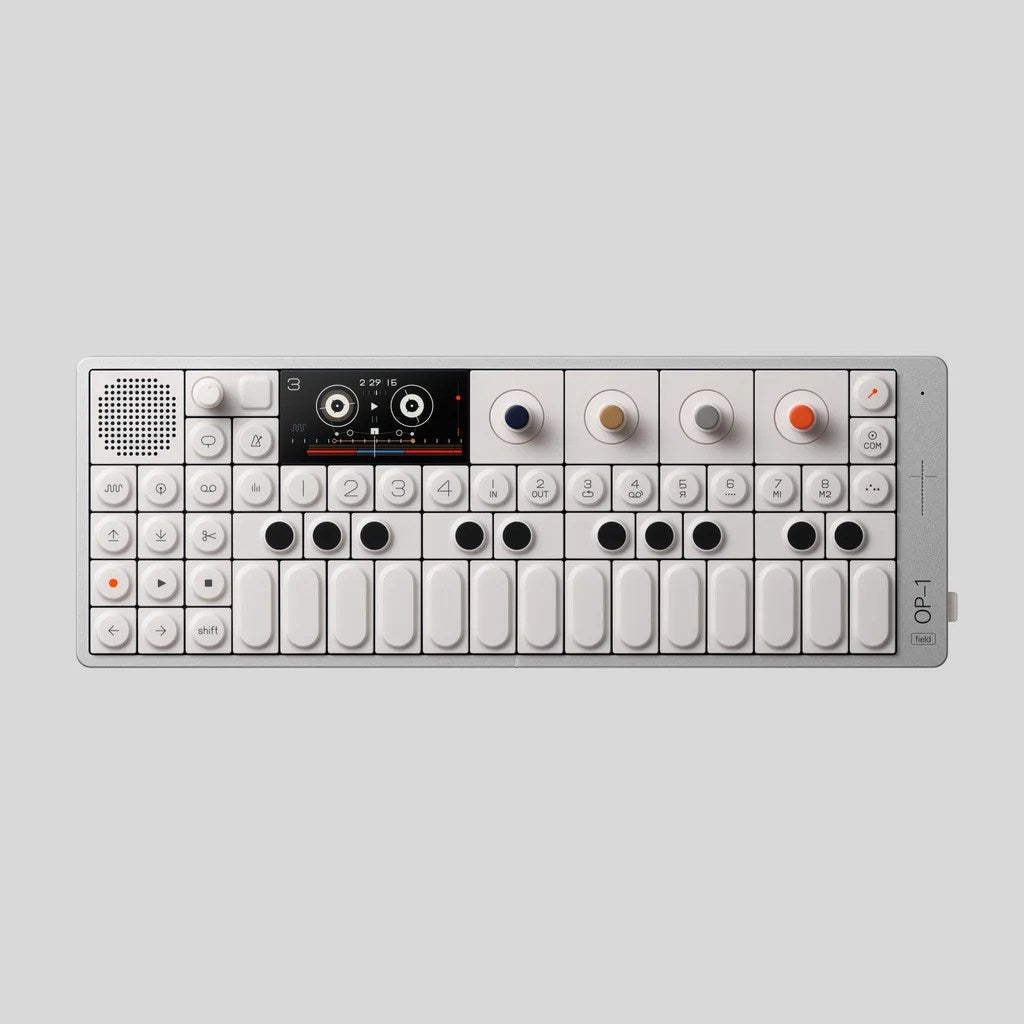
Cover image: OP-1 field, a view of the instrument and its controls. Credit: teenage engineering.
The key points
- What sparked the news: An interview with Jesper Kouthoofd published by Highsnobiety in October 2026
- What is not established: A single end-of-sale date covering every device
- Devices to tell apart: OP-1 field, OP-XY and EP-133 K.O. II
- Verified support: The official OP-1 field page lists updates released in 2026
A statement of strategy, not a closure notice
In the interview published by Highsnobiety, the founder explains that he announced internally a plan to stop making synthesizers. The statement matters, but on its own it does not amount to a full end-of-sale, repair or support schedule for each device.
As of October 28, 2026, the brand’s website still features instruments and accessories. The catalog and the download pages therefore need to be checked separately from the interview. A temporary stock shortage does not prove that a model has been permanently discontinued either. The sources cited contain no announcement that Teenage Engineering is shutting down all of its activities at once.
Manufacturing, sales and software support: three separate timelines
A production decision concerns the manufacturing of new devices. Sales can continue with stock that is already available. Software support, for its part, depends on released versions, fixes and decisions specific to each machine. These timelines can overlap without moving at the same pace.
That is why a statement about the future of the synthesizers does not automatically give a date for their disappearance from stores. Nor does it mean that devices already sold would stop working. Conversely, a model’s presence in a catalog is not a promise of unlimited production or maintenance.
To follow the story, look for three kinds of documents: a dated announcement specifying the models concerned, their actual commercial availability, and the download or support pages. At this stage, the interview provides a strategic signal. The official information cited documents the products and their recent support, without inventing an end-of-life schedule.
OP-1 field: thinking in recording and manipulation
The OP-1 field brings synthesis, sampling and recording together in a portable format. Its virtual tape logic invites you to build a track through takes, cuts and layers. The right way to understand this instrument is how you like to record an idea, not just the length of its spec sheet.
The official download page notably mentions version 1.7.0 from April 2026 and the addition of undo for the tape. Older comments about the lack of this feature therefore do not necessarily describe the current software. Before buying used, ask which version is installed and check the official update procedure.

What the 2026 updates change in how we read the OP-1 field
The official download page provides a verifiable detail: version 1.7.0, dated April 29, 2026, notably adds an undo function on the virtual tape. Version 1.7.3+1, dated May 26, then documents stability and behavior fixes. The software record is therefore not limited to old versions left behind on a page.
This matters for comparisons: a review written with an older version may describe a limitation that has since changed. Before concluding that an operation is impossible, compare the version tested with the update log. The reverse also holds: a recent new feature does not guarantee that a function you want will be added in the future.
The virtual tape implies a particular relationship with the track. You work with recorded audio, you keep a take, you move it or transform it. That gesture differs from a project built solely from MIDI notes that can be rearranged at any moment. The best choice therefore depends as much on how you finish your tracks as on the list of sound engines.

OP-XY: another way to structure a track
The OP-XY puts sequencing and pattern-based building front and center. Even if its format recalls the OP-1, the two should not be seen as two colorways of the same instrument. Working in sequences and working in takes do not create the same relationship with time, repetition and arrangement.
To get a feel for it, pick a concrete operation: programming drums, changing a variation, then moving a section of the track. Watch how each machine handles these three actions. A spectacular demo is less useful if it does not show the gestures you will repeat every day.

OP-XY: understanding tracks, patterns and scenes before the specs
The official OP-XY manual distinguishes eight instrument tracks and eight auxiliary tracks. The former hold the musical elements; the latter are used notably for effects and for interacting with other signals or devices. Arrangement mode then lets you chain scenes made up of patterns.
Take a working example, without claiming to describe a track that ships with the machine. A first scene might bring together drums and bass; a second adds a melody; a third removes certain elements to create some breathing room. The point of sequencing is being able to change this organization without re-recording each part as a full take.
That does not make the OP-XY better than the OP-1 field for every use. Someone who likes recording happy accidents and manipulating audio fragments may prefer another logic. Someone who wants to regularly revisit notes, patterns and structure may find this organization more familiar. The useful criterion is the gesture you repeat during a session.

Sampling: what the OP-XY manual confirms
The chapter dedicated to sampling gives a maximum length of twenty seconds per take. It also distinguishes between uses of the drum sampler and the multisampler. Importing files and organizing sounds are part of the work, just like recording an external source.
To prepare a project, start with clearly named files and sounds whose origin you know. A folder full of indistinguishable variants slows down your choices. Separate percussive elements, sustained notes and long textures: they do not call for the same cuts or the same start points.
A length limit alone does not tell you whether the device suits your practice. For isolated drum hits, the need is very different from that of a long vocal take. Match the machine to the material you actually use. To work on rhythm regardless of the instrument you choose, check out our twelve hi-hat patterns to program.

EP-133 K.O. II: the sample as a starting point
The K.O. II belongs to the sampler and sequencer family. It lets you start from recorded sounds and arrange them into rhythms and tracks. This approach speaks directly to producers who like to build around a kit, a texture or a short take.
To prepare your files, our guide choosing a rap drum kit helps you compare formats and sound types. The 12 hi-hat patterns to program then provide rhythm exercises. These are method resources: always check the device’s compatibility and memory limits before a transfer.

OP-1 field, OP-XY or EP-133: comparing the methods
| Device | Starting point | Question to ask yourself |
|---|---|---|
| OP-1 field | Synthesis, sampling and recording on virtual tape | Do I want to build the track through takes and audio manipulation? |
| OP-XY | Sequenced tracks, patterns and scenes | Do I need to easily revisit patterns and the order they play in? |
| EP-133 K.O. II | Sampling and playing triggered sounds | Does my work mostly start with chops, drums and fragments? |
This table compares approaches, not quality scores. It does not claim that any device is reserved for one musical genre. The same loop can serve as the starting point for several methods; what changes is the path to turning it into a track.
Before choosing, picture a complete session: capturing a sound, building a rhythm, recording an idea, saving and exporting. A feature that dazzles during a demo can become secondary if the step that usually holds you back remains difficult. Conversely, a less spectacular device can be the right fit if it makes that step easier.
Buying now: questions more useful than the rumor
Start with your real use: recording a vocal, playing notes, chopping a sample or controlling other machines. Then check the connections you need, the manual, the battery condition on a used unit, the seller’s terms and access to updates. The official website remains the first place to look for this information.
Our take: a statement about future strategy justifies neither a rushed purchase nor a promise of rising value. An instrument earns its place if it suits the way you work today. To explore music built between the voice and electronic production, our feature on Kelela and new avatar opens up another side of the discussion.
Buying used or keeping your instrument: the useful checks
On a used machine, test the keys, the encoders, the audio outputs, the recording input and the USB connection. Check that a project saves and then reloads normally. Ask for the system version and examine the battery condition if you plan to use it unplugged. These concrete checks count for more than a listing speculating on future rarity.
If you already own an instrument, start by backing up your projects following the manufacturer’s procedure. Read an update’s release notes before installing it, especially in the middle of important work. Do not mistake a change in brand strategy for an obligation to replace your gear.
Finally, music is not just about the machine that makes it. Our features on Kelela’s new avatar and beabadoobee’s Pylon look at production roles, collaborations and how a released project is built. They are not proof that these artists use the devices described here.
Frequently asked questions
Has Teenage Engineering shut down?
No. The statement cited concerns a plan to stop manufacturing synthesizers, not the closure of the company. The official catalog was still online on October 29, 2026.
Is the OP-1 field still getting updates?
Its official download page lists versions released in 2026. This documents recent support, without guaranteeing how long it will last.
Are the OP-1 field and the OP-XY the same instrument?
No. The OP-1 field notably favors recording on virtual tape, while the OP-XY emphasizes building with sequences. Their working methods differ.
What is the difference between ending production and ending sales?
Production concerns the new devices being made. Stock can continue to be sold afterward. An end-of-production date alone does not tell you when availability will end at every retailer.
Which OP-1 field update adds tape undo?
The official log credits the tape undo function to version 1.7.0 from April 29, 2026. Check the installed version before comparing your instrument’s features.
How many instrument tracks does the OP-XY have?
The manual distinguishes eight instrument tracks and eight auxiliary tracks. The auxiliary tracks are not eight additional synthesizers.
What sampling length does the OP-XY manual give?
The official sampling chapter gives a maximum of twenty seconds per take. This figure should not be confused with the total length of a track or the overall capacity of a project.
Should you buy right away for fear of a shortage?
The sources cited do not make it possible to predict future stock or prices. Compare your working method, the machine’s condition, the warranty and the support terms first.
Also on HYTRAPE
Sources and verification
Feature reviewed and expanded on October 29, 2026. Prices, availability, schedules and statistics are dated in the text and may change.
HYTRAPE shop · Free Resources
Put your reading into practice.
A Free Resources selection from HYTRAPE’s independent creators.
-
 HYTRAPE x ATTRACT VISUAL
+10 BROKEN GLASS TEXTURE (FREE)
Free
-
 HYTRAPE x ATTRACT VISUAL
+100 HD TEXTURE PACKS (FREE)
Free
-
 HYTRAPE
BERRIE FONT (FREE)
Free
-
 Fox Rockett Studio
Surface Supply Texture Pack
Free
-
 HYRO(IC)
+35 HYROIC / HYRO(IC) FREE sample pack
Free


20,000+ downloads 4.7/5 45 verified reviews
Keep reading
BEATMAKING
What tone should you choose for your tongue drum?
Thinking about buying a tongue drum? You've discovered that it can be tuned to different keys or scales. But you're confused about which one to choose? The...