




HOW TO CHOOSE THE PACK THAT LIFTS YOUR VERSES AND KEEPS YOUR SIGNATURE
Rap drum kits 2025: choosing the pack that keeps up the pace (tests, patterns, 808s)
RAP 2025: A CLEAR SOUND, A TEMPO THAT BREATHES
Rap in 2025 rewards simple arrangements and consistent tones. The vocal stays upfront, the 808 sings instead of crushing everything, and the highs articulate without causing fatigue. It’s not the size of the pack that makes the difference, but how its 808s, kicks, snares and hats hold up to tempo changes, last-minute features and multi-platform exports. A good drum kit doesn’t feed a showcase; it guarantees a steady pace. Club and rap scenes feed each other: the Jersey/club style has taken root far beyond a TikTok trend, with a clear historical background (Newark, Baltimore/Chicago roots) and an energy that runs through today’s rap and dance formats.
SUB-STYLE TEST BENCH: LET THE SOUND SPEAK, NOT THE MARKETING
To evaluate a pack, work in a consistent master project with a guide vocal from the very first loop. Start in mono to judge transients and clarity, and only open up the stereo field when it’s time to lift the chorus. Three settings reveal everything. On Jersey/club ground at 135–150 BPM, the kick must stay bouncy and the top end polished, without harsh highs when you speed up the pattern. On Detroit/Flint ground, where flows deliberately play with off-beat timing, you need a tunable 808 that “reads” the note on small speakers and snares that speak in the mids without hissing. On slower trap-soul ground, the 808 tail and the snare’s micro-reverb must breathe without swallowing the diction. These criteria match the aesthetics shaping the year: club rap fueled by dance and fast edits, Detroit rap driven by a different rhythmic “pocket,” and melodic trap where the vocal needs a clear lane.
TODAY’S 808: USEFUL HARMONICS, SUBTLE GLIDE, TAMED TAIL
The 808 is no longer just low-end mass; it’s a melody you can hear on a smartphone. Tune it up an octave to lock in your ear, come back down in semitones to the fundamental, then dose saturation as a harmonic strategy, not as a band-aid. The tail should fit the phrase; a subtle glide is enough to make it feel like it’s singing. If you mix for streaming platforms, aim for a master that avoids encoding artifacts: the common target is around −14 LUFS integrated with conservative True Peak ceilings, which preserves the drum attack and vocal clarity after normalization.
KICKS, SNARES, HATS: A GRAMMAR, NOT A STOCKPILE
A short kick leaves the center to the vocal, the snare lives in the mids without harshness, and the hat stays readable at high speed with a controlled opening gradient. Look for tonal consistency within a single pack rather than a collection of “effects.” When the family is solid, you can go from 92 to 156 BPM without rebuilding the whole kit and keep the same signature from single to single, even when you bring in club patterns or a Detroit-style off-beat. Scene benchmarks confirm this aesthetic: the club-rap wave keeps its historical references while feeding contemporary rap formats, whereas the Detroit sphere favors a “talky” delivery over dry, fast drums.
RELEASE SCHEDULE, ALGORITHMS AND STREAMING REALITY
A consistent kit pays off above all in your release pace. On the distribution side, Spotify offers an ecosystem of tools designed to activate clear phases (launch, discovery, re-engagement): playlist pitching, Discovery Mode, Showcase and Marquee stack up to turn regular listeners into “super listeners,” with trade-offs worth understanding before opting in on too many tracks. Building tight release cycles, where the drums stay recognizable from one track to the next, gets the most out of these tools without diluting your signature.
HANDS-ON TEST RUN: FROM EMPTY PROJECT TO A TRACK THAT HOLDS UP
Open a project with a shared drum bus, bring in the guide vocal very early, and don’t trust samples in isolation. Lay down a tuned 808 that “reads” the note on modest playback systems, a short kick, a clear snare and an articulate hat. Check in mono, and only then widen the stereo image with restraint. On a club beat, try a syncopated kick and a slightly off-grid hat for bounce; on a Detroit beat, let the vocal “talk” over a dry, single-tone pattern; on a trap-soul track, control the 808 tail with a fast envelope and leave a touch of room on the snare for air. Then export a reference version at streaming levels, compare it on smartphone, headphones and car, and lock in the chain.
Build the foundation with ETERNAL SOUNDS VOL.2 DRUMKIT. Its 808s tune quickly and handle saturation without getting muddy, the kicks cut through in mono without stealing air from the vocal, the snares crack without hissing, and the hats stay articulate at high speed. This pack works as a common language rather than a fireworks display; it turns hours of tweaking into minutes of solid writing for a series of singles.
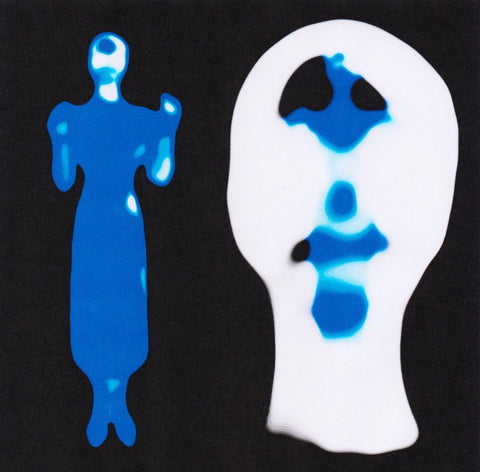
+455 SOUNDS — CHAOS DRUMKIT — ROOM 302 — INERTIA
These HYTRAPE picks round out the palette: dry textures for Detroit/Flint territory, sharp attacks and grainy hats for club formats at 135–150 BPM, and “talking” snare variations suited to trap-soul. Depending on your pipeline, use them as specialized extensions around your ETERNAL SOUNDS VOL.2 DRUMKIT backbone, not as random replacements. To refine your selection, explore our full collection of drum kits designed for every contemporary rap aesthetic.
ONE LAST REMINDER BEFORE EXPORT
If your mono version keeps the vocal diction and hat clarity when you compress to platform format, the stereo version will shine without cheating. Keep an eye on normalization, don’t crush your mix to “gain” a few dB that will be taken away later anyway, and plan your releases with tools built for the long run. That’s the best way to make a drum kit count in 2025: turn a pack into a release rhythm without losing your identity. (Spotify)




Share: