

![+500 ALLSTARS MULTIKIT SOUNDS [BY @prodbytidz & @hytrape] HYTRAPE](http://hytrape.com/cdn/shop/files/MULTIKIT_ALLSTARS_COVER.jpg?v=1722520643&width=240)

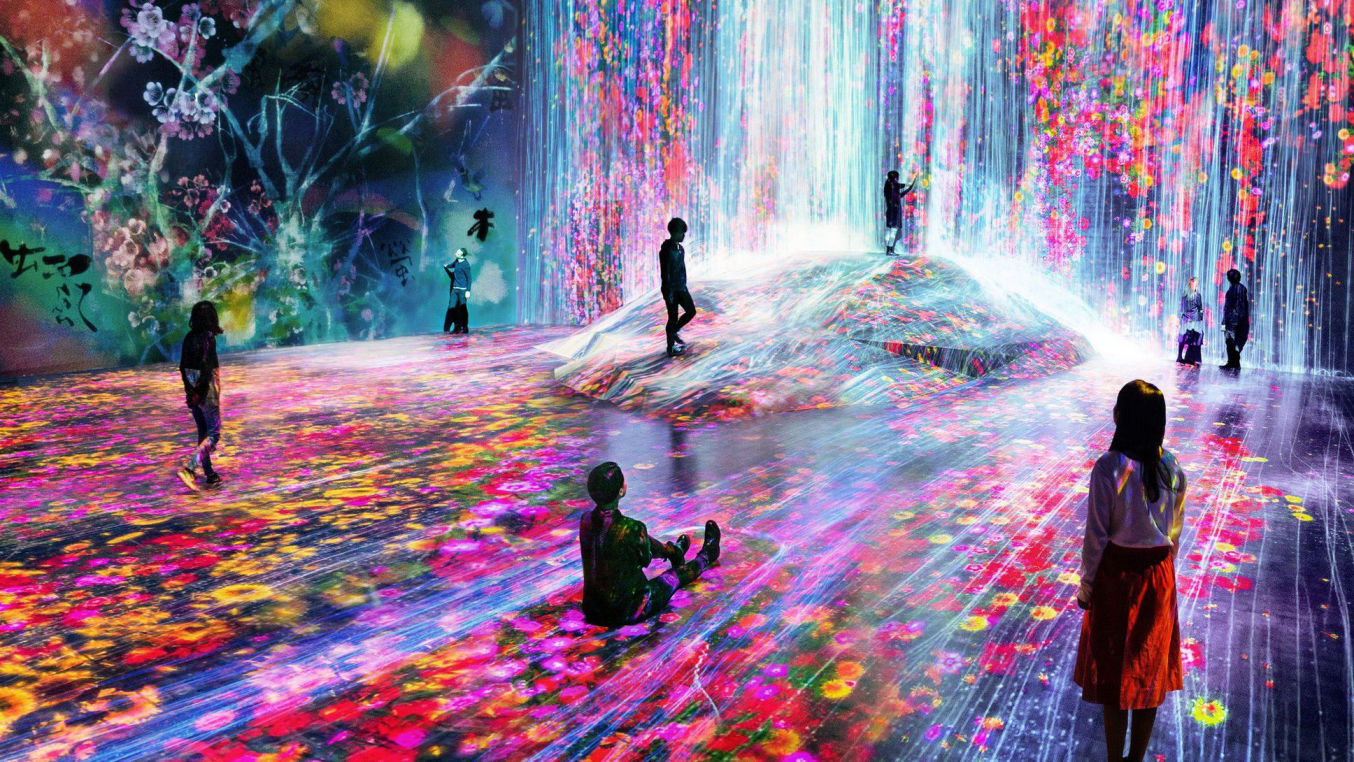
2025 confirms in black and white what the scene had been anticipating: digital art is no longer a mere gadget addition; it is now at the heart of the market. The 2025 Art Basel & UBS report shows that more than half of high-net-worth collectors have acquired at least one digital artwork recently, placing this medium almost on par with sculpture in certain segments.
Major fairs have stabilized their digital sections
One can find videos, generative artworks, interactive installations, and blockchain-linked pieces where relevant, often presented by galleries that have learned from the NFT cycle: less raw speculation, more curation. Specialized events, connected to Art Basel or other major fairs, are becoming serious venues for native digital art.
But the strategic interest lies elsewhere: the dominant aesthetic of these spaces comes directly from the underground. It is VJs, generative artists, motion designers, creative developers, and club collectives who have set the visual standards now adopted as "legitimate."
These players spent ten years working in unstable conditions: party scenography, festival visuals, low-budget music videos, self-produced installations. They arrive in 2025 with an advantage: real technical mastery, a coherent visual language, and the ability to produce experiences, not just renders.
Institutions, meanwhile, are in a catch-up phase
They are trying to understand AI, blockchain, and immersion, while avoiding repeating the mistakes of the speculative bull run. They select artists capable of articulating form and content: critique of systems, memory, ecology, identities, territories, data, spirituality, inhabited virtual architectures.
For digital creators, this context opens up a field, but requires lucidity
Concrete opportunities: access to residencies and commissions for installations, interactive environments, situated generative artworks; possibility of selling limited digital editions under contractual frameworks (with or without blockchain); easier dialogue with galleries that better understand the formats.
Risks not to be overlooked: aesthetic appropriation without recognition of the scenes that pioneered these codes; pressure to smooth out the discourse or neutralize political charge; confusion around generative AI: some institutions fantasize about "disruption" without distinguishing between superficial experimentation and true research.
The perspective to keep: the underground built the credibility of digital art. 2025 should not be the moment it is dispossessed. Artists who stand out are those who arrive with a solid body of work, a clear narrative, and the ability to navigate institutional frameworks without compromising their language.
Legitimacy is no longer about "is it digital or not." It's about the quality of thought, the coherence of the system, and how tools (including AI) are treated as means, not as slogans.
Partager: