

![+500 ALLSTARS MULTIKIT SOUNDS [BY @prodbytidz & @hytrape] HYTRAPE](http://hytrape.com/cdn/shop/files/MULTIKIT_ALLSTARS_COVER.jpg?v=1722520643&width=240)

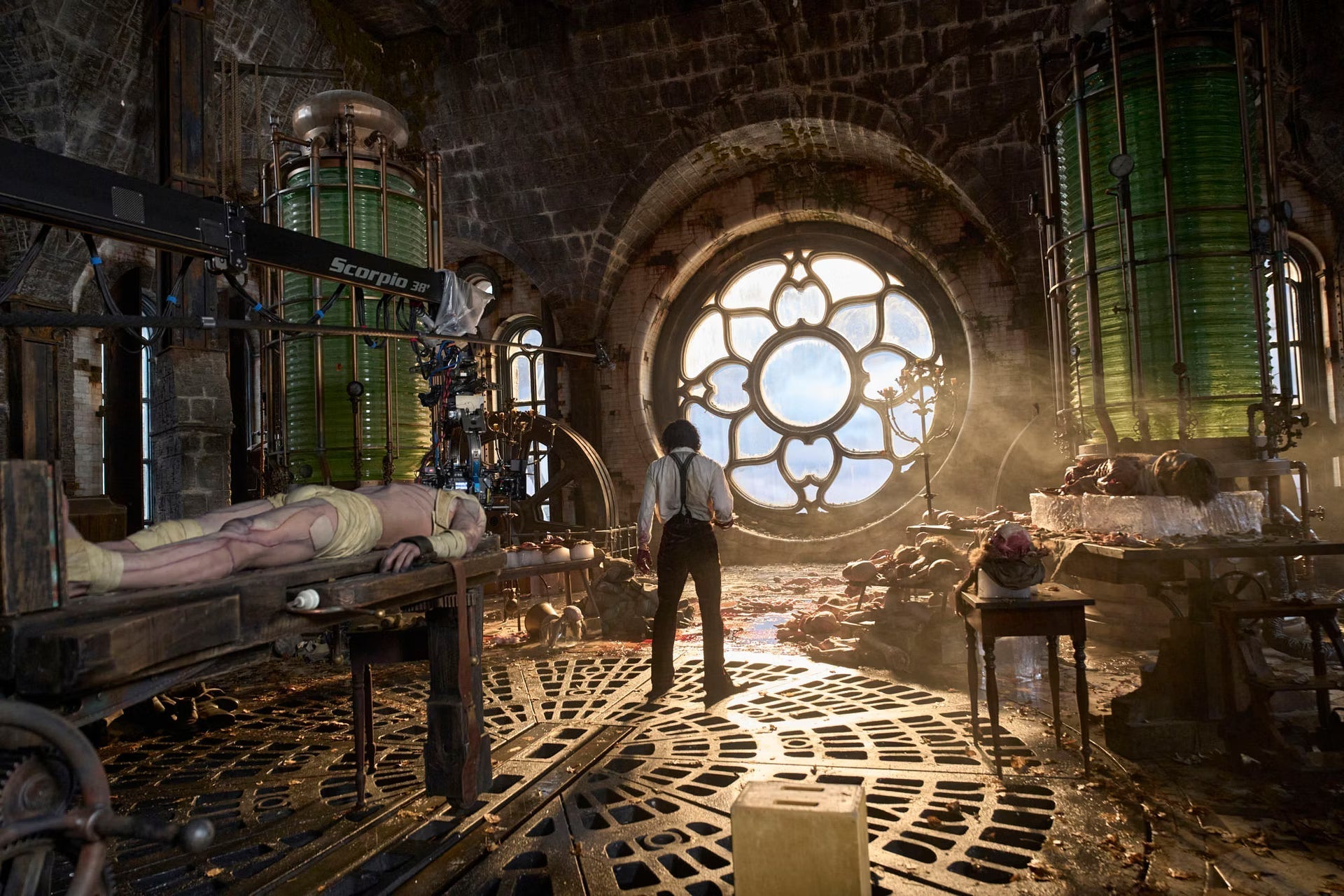
November 2025 marks the return of the grand narrative melody with the score of Frankenstein. This work is a powerful counter-manifesto to the rhythmic saturation and loudness war of the market: it reminds us that the most powerful sound is one that breathes and is charged with literary emotion and dramatic dynamic. For the Hip-Hop storytelling producer or the Alt-Rap Visualizer composer, this analysis is crucial for injecting literary depth and gothic gravitas into productions. The luxury in 2025 is not the complexity of drumming, it's melodic sincerity and the art of tension without noise.

The dictatorship of theme and the importance of the acoustic solo
The first lesson of the score is the memorable melody and the clarity of the message. Short, but instantly recognizable melodic motifs must be created, embodying a character or concept.
The Identity of the Acoustic Solo: The role of the solo violin or detuned piano is the embodiment of individual vulnerability. This acoustic element must be treated as the main narrative voice. It should be detached in the mix, with reverberation that gives it space. Producers turn to collections of detuned pianos and instruments to achieve this sound of immediate fragility.
The Frequency of Melancholy: The work must be done on the mid-high frequencies (2kHz - 5kHz) that carry human emotion (the voice organ, high strings). These frequencies must be open and airy to allow the melody to breathe and dominate the space.
The Narrative Anchor: Harmony is anchored by working the low-mids (150-300 Hz) of cellos and brass to create a dull physical presence.
The Baroque: Sculpting sound texture
Baroque aesthetics demand density, ornamentation, and contrast, even in a modern mix.
Grain and Sacred Choir: Depth is not in reverberation, but in the texture of the sound. Use filtered choirs (treated with slight distortion or cathedral reverberation) and textured strings (with a slight crackle or analog grain). For the highest dramatic authority, libraries of ceremonial choral stems offer the raw vocal emotion needed to manipulate the ambiance (inversion, distortion) and reinforce the sacred or cursed aspect of the melody.
Instrumental Dissonance: Introduce rare or detuned instruments (an altered harpsichord, a distortion-treated cello) that immediately evoke the idea of rupture or tortured genius. This is the sound of intentional imperfection.
How to build anxiety and the feeling of danger: The sound of threat
Sonic Foreshadowing is the key to dramatic tension. It involves slipping a motif related to the coming conflict, almost audibly, to prepare the listener.
Following the example of the audio foreshadowing in Into the Spider-Verse where the theme of the Prowler sound is literally Miles's inverted, Frankenstein (2025) uses the same narrative grammar: the Creature carries a simple and singable melody (strings/solo violin) while Victor advances with a more geometric motif (piano/short cellos). Very early on, harmonic leaks reveal the Creature's "damaged" melody in Victor's environment (mutes, filtering, altered intervals), then Victor's motif comes to scratch the Creature's lyrical line in its moments of empathy. A sonic clue sown from the beginning, pay-off when their arcs clash: the tragic link was already in the ear.
Why is it ultra-effective in 2025? The score brings back to the center legible and memorable identitarian leitmotifs, capable of telling the arc before the image.
The Creature: lyrical, breathing theme, coding humanity and solitude.
Victor: rational, pulsed motif, coding control and scientific excess.
The inversion/contamination between the two reinforces the "creator vs. creation" conflict and provides an instantaneous emotional map. Result: the music guides the reading of scenes, prepares twists, welds the film to its cultural uses (trailers, Reels, live-to-picture concerts). It's legible, shareable, durable.
This mesh does three things:
-
Guides empathy without over-visual explanation — your ear "recognizes" the Creature before it speaks.
-
Prepares shifts with memorable auditory cues (an alteration, a timbre, a micro-quotation).
-
Creates cross-scene grammar: themes become narrative markers that the audience finds from one sequence to another (and outside the film).
Foreshadowing techniques:
— Early introduction of a sustained dissonance (sul ponticello/harmonics) under the main theme, mixed <10 %: a thin flash of melodic anxiety that "scratches" the beauty of the first scenes.
— Whispering choir with heavy reverb (indistinct vowels) barely audible during a calm shot of the lab: a sacrilegious sign that goes under the radar but conveys the idea of transgression.
— Inverted micro-samples of the Creature's melody (a few "reversed" notes + long reverb), slipped into tissue animation tests: broken time, fractured familiarity that the ear senses before understanding.
— Charged silence and expressive volume automation: we don't smooth, we dig. The "sound of fault" (bow friction, muffled sub-bass) emerges in the dynamic hollow, where attention is maximal.
All this reintroduces a grand narrative melody that is legible on the first listen and rich on the second, exactly what performs well in 2025: it tells a story, it stays, and it lives on beyond the theater.
Every danger has its own note, every theme has its own meaning, adding depth to the rhythm of the narration.

The sound of threat must appear in the dynamic hollow, where the ear is most alert.
Mastered narrative flow and architecture of urgency
The search for the perfect sample or the recording of credible virtual instruments consumes valuable time. The secret to fast and dense production lies in investing in orchestral asset collections that immediately provide thematic melodic fragments and non-smooth string textures.
The use of orchestral drama kits and choral stem libraries allows for quick integration of narrative depth and gothic sound texture. These tools allow the composer to focus on the most crucial stage: mixing, dynamic mastering, and the subtle dosage of Foreshadowing. It is imperative to respect headroom and dynamics (LUFS) to ensure that emotional intensity comes from contrast, not raw volume, the hallmark of professional mixing.
To assert the authority of the score, common weaknesses in the Neo-Classical genre must be banished, namely:
"Chatty Sample": The use of an overly rich orchestral loop that steals the identity of the track. Orchestration must be deconstructed into stems to use only the necessary layers.
"Smooth" Mixing: Lack of dynamics and over-compression destroy tragic emotion. The contrast between silence and crescendo must be violent.
Clean Piano: A piano or violin that is too clean, without grain, without the friction of the bow or hammer, lacks the authenticity and vulnerability required by the tragic aesthetic. Texture is as important as melody.
Obvious Foreshadowing: The dissonant motif should never fully integrate with the main melody; it should remain a spectral anomaly.
Partager: