

![+500 ALLSTARS MULTIKIT SOUNDS [BY @prodbytidz & @hytrape] HYTRAPE](http://hytrape.com/cdn/shop/files/MULTIKIT_ALLSTARS_COVER.jpg?v=1722520643&width=240)

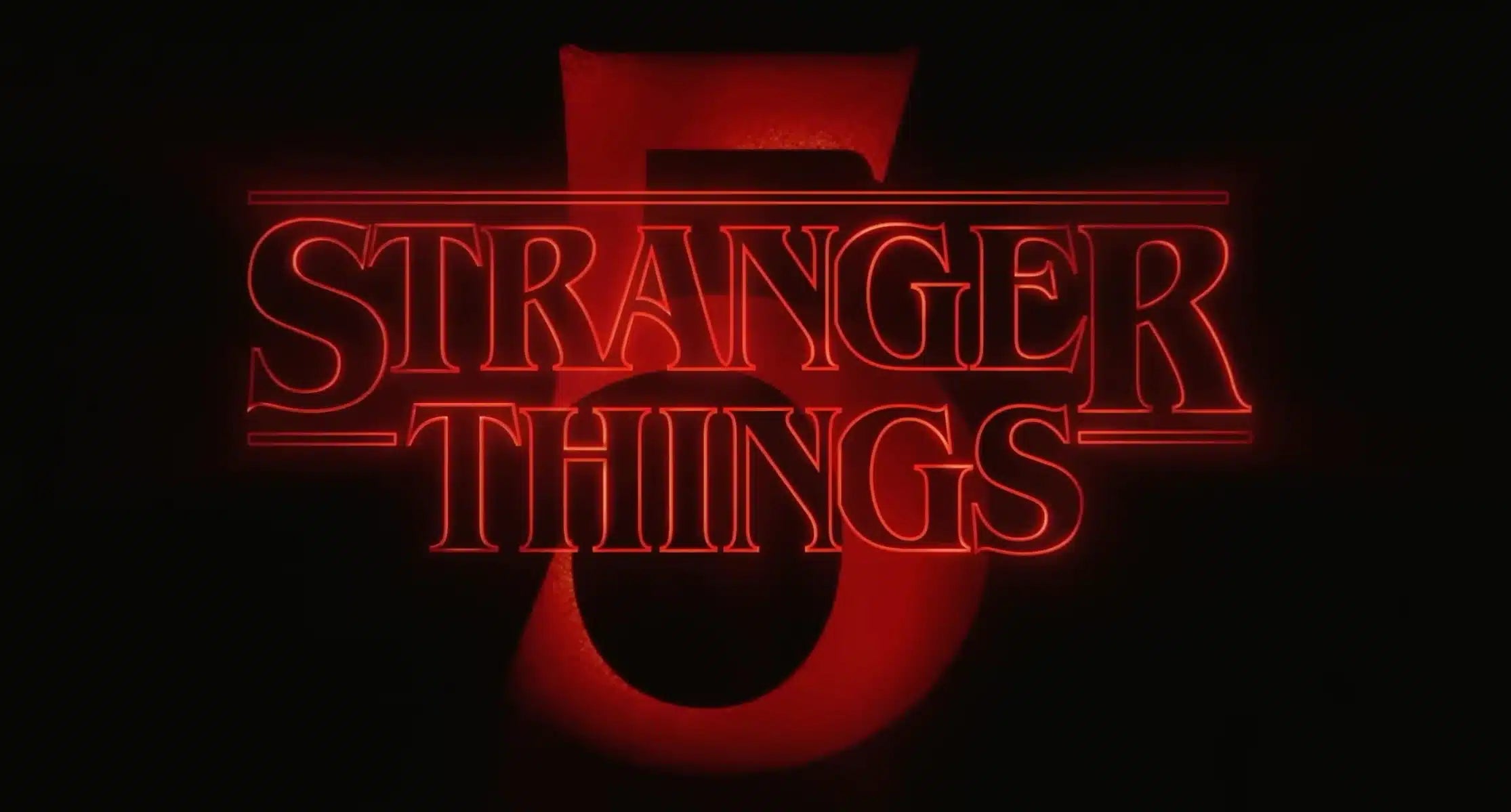
Stranger Things 5 is not just "another anticipated final season." It's the end of an entire cultural cycle.

The series that shaped Netflix's image, reviving 80s nostalgia, influencing the aesthetics of music videos, posters, synths, and marketing campaigns, is now concluding its own mythology in the fall of 1987.
We'll lay out the facts, the setting, then analyze what
this final season is really about. Netflix is treating this release as a global event, designed to saturate the media
landscape at the end of the year and solidify the series' status as a generational phenomenon one last time. The rest of the industry is watching how it ends to adjust their future plans.
A Divided Schedule to Maintain Control
The release is structured as three major global events.
Four episodes on November 26, 2025, three episodes on Christmas Day, and a final episode on December 31st, at 5 PM PST (8 AM ET) for each batch. This division is not insignificant.
It allows for three very concrete things:
To sustain conversation over six weeks, between holidays, year-end reviews, best-of lists, and parties.
To establish the series as a shared ritual, with a viewing schedule closer to broadcast rather than wild binging.
To give weight to the finale broadcast on December 31st: an episode conceived as a symbolic conclusion to the series and, in a way, to Netflix's first major era.
This hybrid binge/event format confirms a 2025 trend: platforms are returning to controlled release schedules to avoid the "marathon, then forget" effect.
The Official Synopsis: Hawkins Under Quarantine, Vecna on the Run, Eleven Hunted
The setting is clear, established by the Duffer Brothers and Netflix in the synopsis and official announcements.
Fall 1987. Hawkins is devastated by the opening of the rifts.
The town is placed under military quarantine.
The government intensifies its hunt for Eleven.
Vecna has disappeared, his plans are unknown.
The group is united around one goal: to find him and kill him.
We are no longer in the vague mystery of the early seasons. The threat is identified, visible, and accepted. The setting is that of an American town literally broken, under military control, with a trapped population. This choice allows for an obvious contrast with the "suburban" Hawkins of the beginning and completes an arc: what was hidden has now invaded everything.
Confirmed rumors from the creators: more revelations about the mythology of the Upside Down, including the famous 25-page internal document written since season 1, used to structure the consistency of the universe and promised as the basis for this conclusion.
We are watching four major areas:
Eleven's Place
She remains the central figure, but in 2025, the character can no longer be treated as a simple "ultimate weapon." The governmental hunt and the accumulated physical and psychological exhaustion require more responsible writing: what autonomy, what limits, what consequences.

Will at the Center
Initial information and marketing clearly indicate a refocusing on Will, his connection to the Upside Down, and what the showrunners present as an identity and emotional arc finally explored to its fullest, after several seasons of hints never fully exploited directly. This resolution will be closely watched.

Vecna and the Consistency of Mythology
Season 4 repositioned Vecna as the architect of evil. The final season must prove that this choice was not cosmetic. The links between the lab, the experiments, the children, Hawkins, and the Upside Down must be clarified without resorting to artificial exposition. This is where the internal lore document and the Duffer Brothers' statements gain weight.

Group Management
Eleven accumulated seasons of attachment to the characters, real growth of the actors, sometimes suspended arcs: the cast is dense. Season 5 must choose. To treat everything superficially would be a failure. To gratuitously sacrifice everything would be equally problematic. The challenge is to clearly prioritize certain aspects and make it accepted.

A Total Event Strategy: Stranger Things 5 is not just a series; it's a global operation.
World premiere in Los Angeles on November 6 (Stranger Things Day), red carpet, livestream, broadcast of the first minutes, physical events in LA, Amsterdam, Istanbul, São Paulo, immersive experiences, partnership with CicLAvia, presence at the Macy's Thanksgiving Day parade, cinema screenings for the finale on December 31.
We are facing a model: blockbuster series treated as cinema franchises, multi-city, multi-platform deployment, exclusive content, fan experiences.
It's also a stress test for Netflix: its ability to mobilize a global audience around a final chapter in a landscape where attention dispersion is maximal.
Why this season matters beyond fandom.
Stranger Things 5 crystallizes several issues for 2025.
Credibility of the "finale"
After years of reboots, spin-offs, and extended seasons, the promise of a true conclusion is engaging. If this finale is solid, it shows that a platform can properly end an iconic series without endlessly prolonging it.
Netflix's Reputation
The series has been the platform's showcase. Its end becomes a message: either "we can still produce strong, finished narratives," or "we have emptied our own symbol." Critical and public reception will weigh on the overall perception of the catalog.
Evolution of Nostalgic Grammar
Stranger Things structured the massive return of 80s nostalgia. Season 5 arrives in a context where this aesthetic is saturated. If it merely recycles, it will confirm the fatigue of the genre. If it uses these references to truly speak of fear, control, militarization, and grief, it leaves something more interesting than vinyls and neon lights.
What we specifically expect from the staging
The trailer and initial visuals show clear points.
Return to Hawkins as the main setting, after the geographical dispersion of Season 4.
Increased presence of Vecna, with more explicit iconography. More pronounced use of rifts in the city as a visual and narrative element.
A darker tone, with credible death stakes for several key characters.
We expect tighter writing: fewer digressions, more impactful scenes. The announced long runtimes for certain episodes only make sense if each segment brings real movement (mythology, relationship, decision, consequence), not just filler.
Stranger Things 5 as the end of a model
Beyond clues, theories, and dissected screenshots, the important point is this: Stranger Things 5 arrives in a landscape that is no longer that of 2016.
The public is more informed, more demanding, more tired of easy strategies. The series market is in a cost crisis. Platforms are testing new distribution formats. AI is starting to enter workflows. "Nostalgic" narratives must justify their existence in ways other than recycling.
We consider this final season a turning point.
If it succeeds, it further validates the ability of great series to conclude ambitiously. If it fails, it becomes the textbook case of an age where the industry failed to let its monuments die at the right time.
We will follow each volume with this framework: narrative coherence, quality of direction, respect for characters, solidity of mythology, emotional readability. Not as fan service, but as an overall reading of a cultural object that has marked almost ten years of images, sounds, art direction, and shared references.
The final season of Stranger Things must not only answer "who survives" or "who dies." It must prove that a narrative that has saturated the collective imagination can still end with precision, instead of fading out due to inertia.
Partager: