



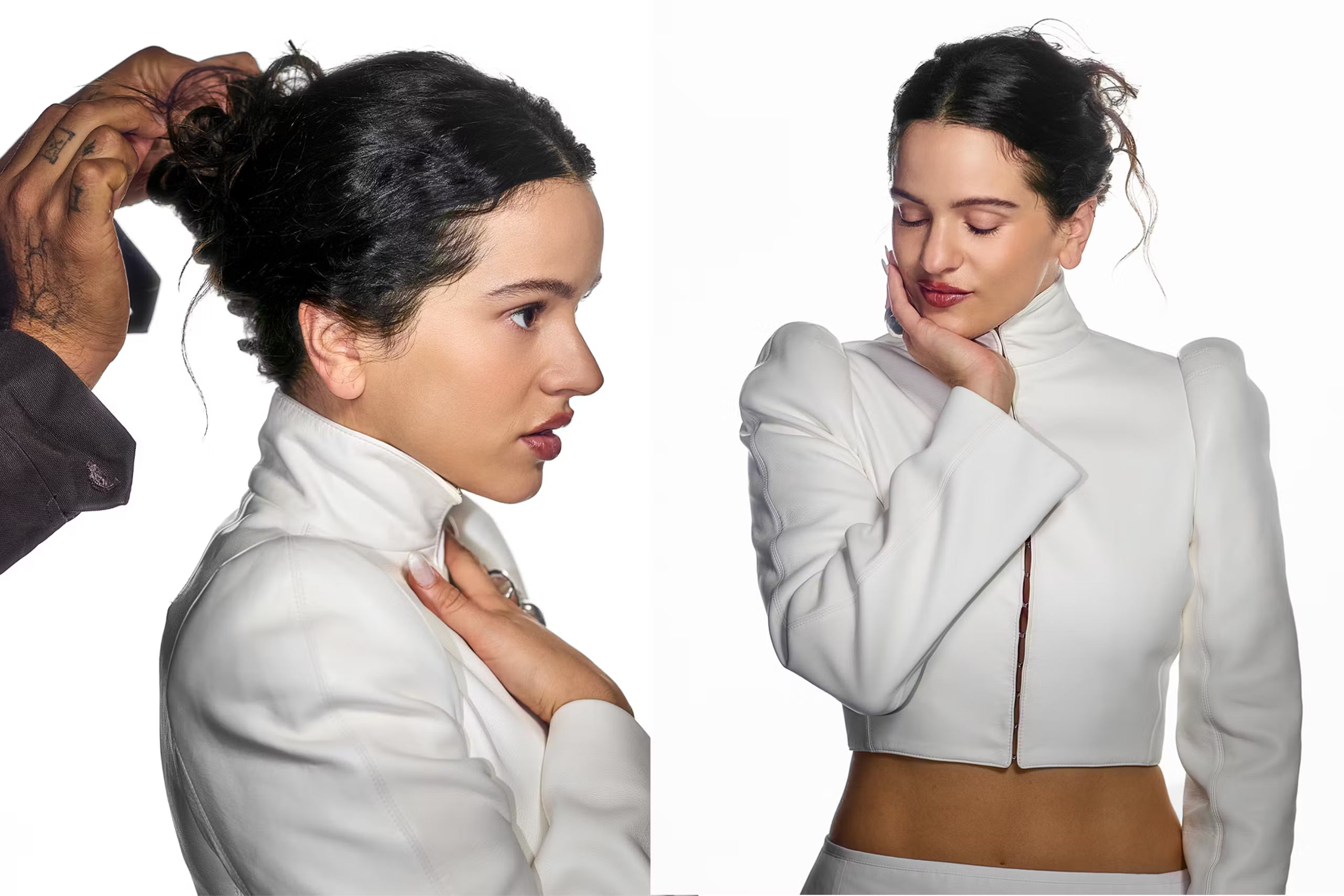
The gravitational center of the week is clear. With LUX, Rosalía confirms that 2025 is not the year of sound walls, but of legibility. “Berghain” serves as an entry ticket: a disciplined kick that moves forward without pumping, crisp hi-hats that blink more than they carpet, a voice held centrally, intelligible, almost spoken at times, never drowned in reverb. The dramatic tension no longer comes from stacking effects, but from the cleverly organized void between sections. Two measures of breathing are sometimes worth an entire drop. This aesthetic is not a whim: it is a production method.
What “Berghain” reveals about the album can be summarized in three actions. First, vocal proximity, sculpted around 1.5–3 kHz without aggressive sibilance, with soft-knee compression that holds the front without flattening it. Then the "singable" bass, short and harmonized: legibility in motion is sought, not a sprawling sub. Finally, high discipline: clean transients, chiseled hats, automations embraced as true narrative commas. The club, here, is mental; you move because the mix breathes.

LUX also reminds us that a chorus doesn't need to explode to exist. It needs to illuminate. Dynamics are conceived in stages — micro-accelerations, density drops, reprises — and not in volume bars. This is good news for solo producers: power is no longer the central argument, precision is. In a DAW, this translates into a series of concrete actions: deciding the envelope of the kick and the 808 before anything else, reserving stereo width for highs, dosing short and recurring spaces rather than a large uncontrolled wash. The "signature" is no longer a plugin; it's a way of opening and closing the windows of the track.
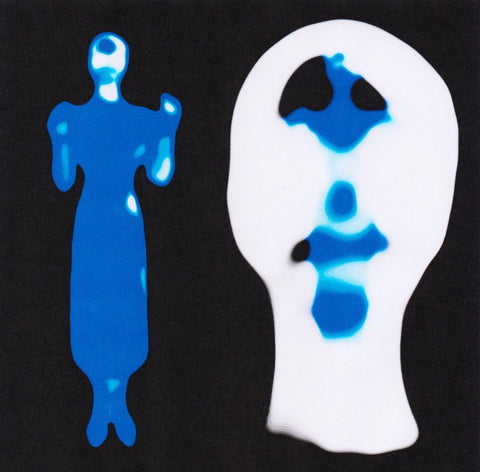
Visually, the direction is the same: reduced palettes, tangible materials, legible volumes, side lighting that sculpts instead of flatters. The artist's recent key art shows that a well-held photo, consistent contrast, and stable typography matter more in the era of vertical thumbnails than a scene saturated with elements. The logic is immediately transferable: a clean background (ivory, sand, cool gray), a dominant material (fabric, frosted glass, brushed metal), a unique motif (jewelry, typogram, hand), the same repeated margin from slide to slide. The eye first identifies the breathing, then the message.

The marketing aligns with this spirit of purity. A totem title that sets the grammar ("Berghain"), a tight album window, a meticulously planned social calendar. November is dense, so the winning asset is not overkill, but coherence. LUX can be summarized in three words: precision, breath, desire. Everything that follows — videos, photos, teasers, live performances — should only serve to reaffirm this triangle.
Merging this return with the week's radar allows us to place each release in its concrete utility. Mercy, the album by Armand Hammer & The Alchemist, plays on density without noise; compact drums, breathing samples, assumed silences. This is a lesson for anyone mixing textured vocals: attack with transients (kick attack, snare envelope), then color; intentionally leave an "empty" measure before the verse entry so that the text arrives with relief. Danny Brown's Stardust reactivates internet-core energy without sacrificing the hook: controlled brilliance, sharp cuts, abrupt but legible transitions. To borrow when you need to accelerate perceived speed without touching the BPM. Even Tame Impala, on the "elegant rave" side, reminds us that a rock-psyche vocabulary can become danceable if the rhythmic section behaves like a club production and the vocal keeps a clear axis. The point is not to like everything: it's to learn something from each and re-inject it, the next day, into your own grammar.
The real question is always the same: how to convert listening into method? Start by setting a clear line for the vocal — gentle equalization around intelligibility, a hint of parallel comp, "soft" saturation if needed to hold the mid-range. Then, lock down the low-end: short envelope, harmonic above the fundamental for legibility, measured sidechain that breathes without pumping. Finally, write automations as intentions: a reverb that opens over one measure, a stereo widening reserved for hats or a granular bell, a filter that doesn't "look good" but tells you why the next section is coming.
Nothing progresses without visual coherence. Album covers and vertical thumbnails govern the entry into the work: a series of three consistent visuals is better than an avalanche of heterogeneous images. Side lighting, matte backgrounds, constant margins, a unique typographic alphabet; the brain recognizes the vibe first, then the brand. This is also where the conversion happens — not just through an explicit call to action, but because visual seriousness proves musical seriousness.
To anchor the approach, transforming the week into an express workshop is enough. Write a breathable "pop-club" loop in the LUX style: short kick, tunable 808, blinking hats, dry vocal in the center. Mirror a minute of "auteur rap" like Mercy: textual density, compact drums, a measure of silence before the entry. Slip in thirty nervous seconds in the Stardust style: bright timbres, sharp cuts, legible hook. Export "dry" and "semi-dry" versions to allow for mixing flexibility. Shoot three sober visuals under side lighting, then harmonize the whole with a neutral LUT. This isn't DIY: it's a serious campaign mockup.
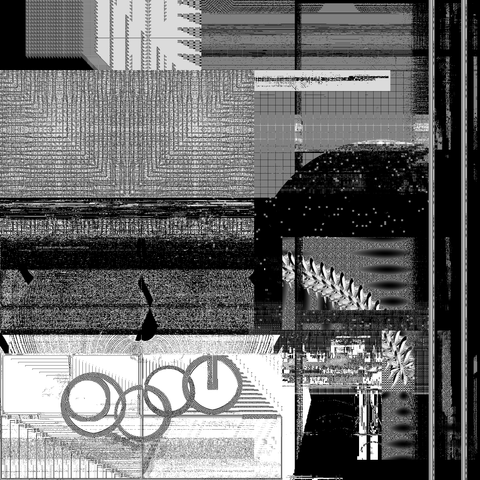
To save time without losing control, anchoring this creative flow to calibrated tools remains decisive. On the sound side, ETERNAL SOUNDS VOL.2 DRUMKIT provides a clean base for short kicks, crisp hats, and tunable 808s that support LUX-style dynamics without eating up air. To vary rhythmic tones and match the internet-core energy, ROOM 302 adds fast Detroit/Trap colors without losing legibility, while +455 SOUNDS completes the alphabet without diluting it. On the image side, MAGAZINE & POSTER MOCKUP SET allows for covers, posters, and vertical thumbnails to be declined on the same grid, and AURA — 30 CHROME LIQUID BACKGROUND ensures immediate harmonization of series: deep blacks, sustained ivory, desaturated reds when classic without rigidity is needed. These resources don't impose anything: they lock in the "hygiene" part so that creation can remain focused on narrative dynamics.
The rest of the month promises to be compact and instructive. The albums that matter in 2025 share a common virtue: they are "clean." Clean infra, breathing mids, disciplined highs; sober images, constant margins; short but assumed narratives. Strength no longer comes from a deluge of layers, but from a secret order maintained from the first to the last second. LUX is emblematic of this movement: an album that shows how to be intense without raising your voice. Taking this gesture seriously, studying it, and adapting it is already gaining a head start—on smartphones, in clubs, and everywhere attention is won at first glance and first measure.




Share: