


![+500 ALLSTARS MULTIKIT SOUNDS [BY @prodbytidz & @hytrape] HYTRAPE](http://hytrape.com/cdn/shop/files/MULTIKIT_ALLSTARS_COVER.jpg?v=1722520643&width=240)

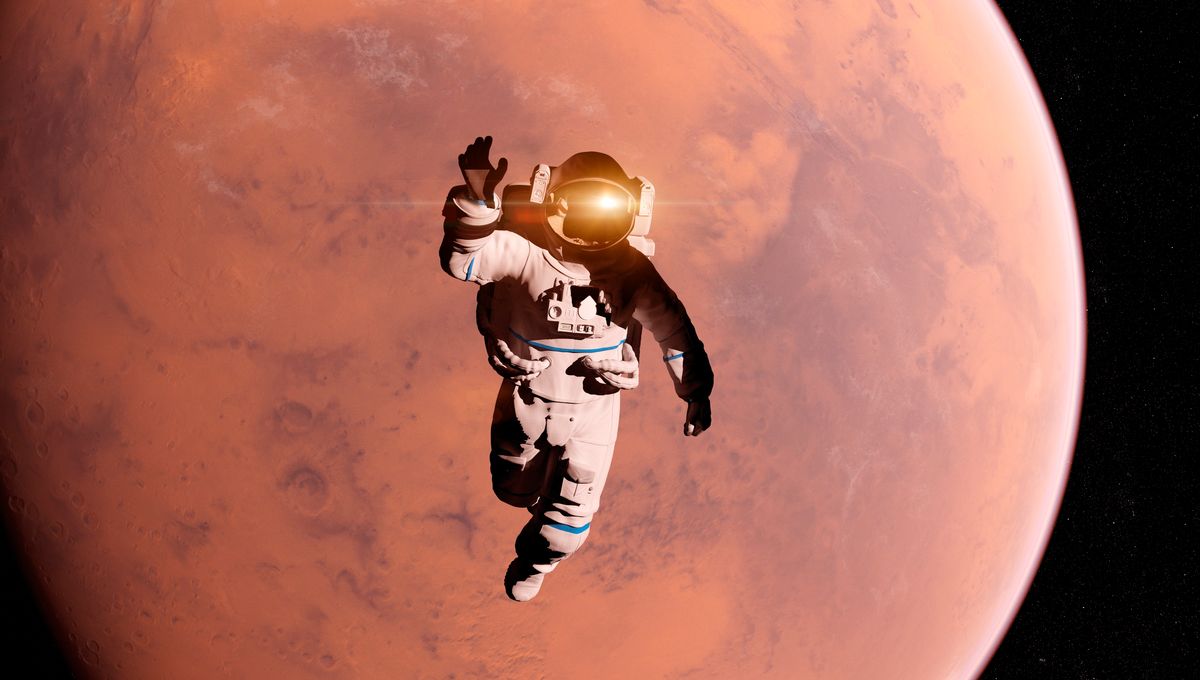
Humanity faces one of the most baffling questions of its existence: are we alone in the cosmic immensity? This question, crystallized in the famous "Fermi paradox," reveals a fascinating mystery. Despite billions of stars and potentially habitable exoplanets discovered, despite more than sixty years of intensive research, cosmic silence remains absolute. No signal, no trace, no proof of extraterrestrial intelligence has ever been confirmed. This troubling absence strikingly contrasts with theoretical estimates that predict the existence of thousands, even millions, of civilizations in our galaxy alone.
This enigma profoundly impacts our understanding of life, intelligence, and our place in the universe. It confronts us with three radically different perspectives: either we are currently passing through extraordinarily difficult evolutionary filters (the "Great Filter"), or our planet benefits from exceptionally rare conditions (the "Rare Earth" hypothesis), or civilizations remain deliberately silent due to existential caution (the "Dark Forest" hypothesis). Today, thanks to new-generation space telescopes, artificial intelligence, and space exploration missions, we are experiencing a golden age of astrobiological research that could finally provide answers.
The Summer of 1950 That Changed Everything
The story begins with a seemingly innocuous conversation on a Tuesday in the summer of 1950, in the corridors of the Los Alamos National Laboratory. Enrico Fermi, the man who helped create the atomic bomb and directed the first controlled nuclear reaction in history, was heading to lunch with his colleagues Edward Teller, Emil Konopinski, and Herbert York. Scientific AmericanBBC Sky at Night Magazine These brilliant physicists were discussing recent UFO reports and a New Yorker cartoon showing little green men stealing trash cans in New York. Scientific American +2
Then, at Fuller Lodge, Fermi suddenly posed a question that still resonates in laboratories worldwide today: "Where are they all?" Scientific American +2 His question came out of nowhere, but according to Edward Teller, "everyone at the table seemed to understand immediately that he was talking about extraterrestrial life." BBC Sky at Night Magazine Fermi followed up with a series of quick calculations – one of his specialties – on the probability of Earth-like planets, the emergence of life, the evolution of intelligence, and the lifespan of technological civilizations. His conclusion was unsettling: "we should have been visited long ago and many times." BBC Sky at Night Magazine
Ironically, what we now call the "Fermi paradox" is not actually Fermi's. The physicist, renowned for his "Fermi problems"—semi-rhetorical questions like "How many piano tuners are there in Chicago?"—was actually skeptical about the feasibility of interstellar travel, not the existence of extraterrestrials. Scientific AmericanWikipedia The true modern paradox was formulated in 1975 by Michael H. Hart in his article "An explanation for the absence of extraterrestrials on Earth," and later developed by Frank Tipler in 1980. HowStuffWorksWikipedia According to historian Robert Gray, the "Fermi paradox" should more accurately be called the "Hart-Tipler argument." Scientific AmericanWikipedia
Three Explanations for the Great Silence
Faced with this cosmic mystery, scientists have developed three major hypotheses, each carrying profoundly different implications for the future of humanity.
The Great Filter: Insurmountable Evolutionary Obstacles
Economist Robin Hanson proposed the concept of the "Great Filter" in 1996—one or more evolutionary bottlenecks so difficult to overcome that they make detectable intelligent life extremely rare. WikipediaAstronomy.com Hanson identifies nine critical steps from the formation of a suitable stellar system to interstellar colonization. Somewhere in this sequence lies a filter so formidable that almost all evolutionary attempts fail. Wikipedia
If the filter is behind us, we are extraordinarily lucky. Abiogenesis (the emergence of life from inanimate matter), the transition from prokaryotes to eukaryotes, or the evolution of intelligence would have been the critical steps. This optimistic view suggests that the human future is promising—we have already overcome the most difficult obstacles.
If the filter is ahead of us, our civilization is heading towards its demise. Self-destruction through nuclear war, climate catastrophe, poorly designed artificial intelligence, or resource depletion would represent this fatal filter. This pessimistic perspective implies that every technological civilization carries within it the seeds of its own destruction. Recent research suggests that future telescopes analyzing exoplanet atmospheres could help determine where this cosmic filter is located.
The Rare Earth Hypothesis: Our Exceptional Cosmic Oasis
In 2000, paleontologist Peter Ward and astronomer Donald Brownlee shook up the debate with their book "Rare Earth". Wikipedia Unlike SETI optimists, they argue that while microbial life may be common, complex life is likely extraordinarily rare. Wikipedia +2 Earth would not be an ordinary planet, but a cosmic oasis resulting from an exceptional confluence of factors. WikipediaAstronomy.com
Critical geological factors include plate tectonics for nutrient recycling, a protective magnetic field generated by a liquid iron core, and a perfectly balanced planetary size. Astronomical factors are equally constraining: position within the galactic habitable zone (neither too close to the radiative center nor too far from heavy elements), a stable solar-type star, and a planetary system with circular orbits.
But perhaps the large moon represents the most exceptional element. Born from a catastrophic collision with a Mars-sized body (named Theia), it stabilizes Earth's axis and creates tides favorable to evolution. Jupiter acts as a "cosmic protector," vacuuming up destructive comets and asteroids. A 2023 study adds the "oxygen bottleneck": atmospheric oxygen concentration must reach at least 18% to allow combustion, and therefore metallurgy and technological development.
The Dark Forest hypothesis: existential caution
The third and most chilling explanation comes from Chinese science fiction. In his novel "The Dark Forest" (2008), Liu Cixin develops an irrefutable logic: if the universe is teeming with civilizations, why are they all silent? Wikipedia His answer is based on three axioms of "cosmic sociology": survival is the primary need of any civilization, civilizations constantly expand but resources remain limited, and it is impossible to know the true intentions of others. Wikipedia
This mutual ignorance creates endless "chains of suspicion." Even if two civilizations know each other to be peaceful, they cannot be certain that the other knows it, and so on. The unpredictability of "technological explosion"—an inoffensive civilization can become dangerous very quickly—makes caution vital. Liu Cixin's metaphor is striking: "The universe is a dark forest. Every civilization is an armed hunter stalking through the trees like a ghost." Revealing one's position is equivalent to cosmic suicide. Wikipedia
This hypothesis elegantly explains the absence of SETI signals: all civilizations practice silent listening out of an instinct for survival. They avoid visible colonization and never transmit. The "Great Silence" would not be due to our solitude, but to universal caution in the face of the dangers of the cosmos.
Sentinels of Hope: Current Research Programs
Despite this unsettling silence, humanity has never been closer to answering the fundamental question. A technological revolution is transforming our ability to detect extraterrestrial life, whether microbial, complex, or intelligent.
SETI: Amplified Listening to the Cosmos
Breakthrough Listen, launched in 2015 with $100 million in funding over ten years, represents the most ambitious SETI program in history. Wikipedia +2 This revolutionary initiative monitors one million nearby stars, the galactic center, and one hundred neighboring galaxies with 50 times greater sensitivity than previous telescopes. Wikipedia It could detect an aircraft radar from any of the 1000 nearest stars. WikipediaBreakthroughinitiatives
Artificial intelligence is transforming this research. In 2023, Peter Ma of the University of Toronto discovered eight signals of interest in 150 terabytes of data by reanalyzing 820 stars with machine learning algorithms. setiEarthSky These signals exhibit characteristics expected from extraterrestrial transmissions: narrow bandwidth, frequency drift, and presence only during targeted observations. EarthSky +2
The Square Kilometer Array (SKA), operational around 2030, will be 50 times more sensitive and 10,000 times faster than current telescopes. Space.com +2 This revolutionary infrastructure could detect radio leakage from civilizations similar to our own up to 50 light-years away.
James Webb: Detector of Living Worlds
The James Webb Space Telescope opens an unprecedented window into exoplanet atmospheres. In 2023, it potentially made the first detection of dimethyl sulfide (DMS) in the atmosphere of K2-18b, a "Hycean" exoplanet located 120 light-years away. On Earth, this molecule is only produced by living organisms. ScienceDaily +2 Although a 2024 study questioned this detection, it illustrates our new ability to chemically analyze distant worlds. ScienceDaily
The biosignatures sought include oxygen coupled with water vapor (indicating photosynthesis), methane with oxygen (chemical imbalance maintained by life), and industrial molecules like chlorofluorocarbons. NASA's future Habitable Worlds Observatory, specifically designed for this quest, could analyze the atmospheres of dozens of Earth-like exoplanets. NASA Blogs
Exploring Hidden Oceans
Space exploration reveals that our solar system harbors several hidden oceans beneath the icy crusts of distant moons. Europa, Enceladus, and Titan contain more liquid water than all Earth's oceans combined. These environments, protected from space radiation and warmed by tidal forces, offer potentially habitable conditions that have existed for billions of years.
Europa Clipper, launched in October 2024, will arrive at Jupiter around 2030 to analyze Europa's sub-ice ocean during 49 flybys. NASANASA Science The mission will search for water plumes ejected into space and analyze ocean chemistry. Enceladus has become ESA's top priority according to 2024 studies, with conceptual missions combining an orbiter, lander, and drill to directly access the ocean. ESA
Dragonfly, a multi-lander helicopter destined for Titan (launch in 2028), will explore the complex organic chemistry of this strange moon where hydrocarbons rain down and methane lakes extend beneath an orange atmosphere. NASA These missions could reveal the first forms of life discovered beyond Earth.
Mars: Archives of Ancient Life
The Perseverance rover is methodically collecting 26 samples from Jezero Crater, the site of an ancient Martian lake. Its recent discovery of "Cheyava Falls" - a rock featuring "leopard spots" potentially of biological origin - illustrates the complexity of this research. NASA ScienceNASA Science These samples, which will return to Earth thanks to the Mars Sample Return mission (despite recent budgetary difficulties), represent our best chance to definitively confirm the past existence of life on Mars. Phys.org
The Drake Equation and its Descendants
At the heart of these investigations lies the Drake Equation, formulated in 1961 and often called "the second most famous equation in science" after E=mc². Britannica +3 Frank Drake, a pioneer of modern SETI, attempted to quantify the number of communicative civilizations in our galaxy: N = R* × fp × ne × fl × fi × fc × L. Britannica +3
This equation, more a tool for thought than a precise formula, reveals the extent of our ignorance. WikipediaSETI We now know the rate of star formation (R*) and that almost all stars have planets (fp). seti Exoplanet discoveries suggest that about 20% of stellar systems contain planets in the habitable zone (ne). SETI But the biological parameters remain complete mysteries.
Frank Drake himself estimated N = 10,000 currently transmitting civilizations, while estimates range from N < 1 (we are alone) to N > 1 million. SETIseti A 2024 study based on chemical complexity estimates between 1.6 and 13,000 instances of life per galaxy Astrobiologyastrobiology - a number that seems tiny in a galaxy of 400 billion stars.
Optimists vs. Skeptics: A Battle of Visions
This uncertainty fuels a passionate debate between optimists and skeptics, embodied by charismatic figures with opposing convictions.
Heralds of Cosmic Hope
Carl Sagan (1934-1996) remains the icon of SETI optimism. Co-founder of modern extraterrestrial intelligence research and creator of the "Cosmos" series, seen by 500 million people, he championed the "principle of mediocrity": since Earth is an ordinary planet orbiting an ordinary star, life should be common. Wikipedia His poetic vision is reflected in this quote: "We tend to have such a narrow view of our place in space and time, and the prospect of making contact with an extraterrestrial intelligence helps to deprovincialize our worldview." blankonblank
Frank Drake, who passed away in 2022, dedicated his life to this quest. A pioneer of Project Ozma in 1960 — the first modern SETI search — he transformed the Arecibo Observatory into a state-of-the-art facility and co-created the most powerful radio message ever transmitted into space. Wikipedia +3 His faith never wavered: "Personally, I find nothing more tempting than the thought that radio messages from extraterrestrial civilizations in space are passing through our offices and homes, right now, like a whisper we can't quite hear." Wikipedia
Jill Tarter, co-founder of the SETI Institute and inspiration for the character Ellie Arroway in "Contact," broke gender barriers in astronomy. Wikipedia The only woman in her engineering class at Cornell in 1965, she transformed an accidental career into a life mission. Wikipedia Her philosophy summarizes the essence of SETI: "SETI holds up a mirror, showing us what we look like from a cosmic perspective."
Seth Shostak, senior astronomer at the SETI Institute, maintains bold predictions: he bets on a discovery of extraterrestrial intelligence within the next twenty years, basing his optimism on the rapid expansion of technological capabilities and the massive discovery of exoplanets. Wikipedia
The Guardians of Scientific Realism
In contrast to this optimism, proponents of the Rare Earth hypothesis put forward an implacable realism. Peter Ward and Donald Brownlee argue that while simple life may be widespread, biological complexity requires an exceptional confluence of factors. Wikipedia Their detailed analysis of Earth's conditions reveals a planet with potentially unique characteristics: plate tectonics, a large stabilizing moon, a protective Jupiter, and a perfect atmospheric composition.
This skeptical perspective extends to SETI methods themselves. Our telescopes would not be able to detect our own signals beyond 100 light-years, and advanced civilizations would likely have surpassed the radio age. Wikipedia The hypothesis becomes unfalsifiable: SETI can continue indefinitely without ever proving the absence of life.
The Technological Awakening of 2023-2025
Recent years have seen a dramatic acceleration in research. The COSMIC system at the Very Large Array analyzes 2000 cosmic sources per hour in real-time, revolutionizing our monitoring capabilities. SETI More than 500,000 sources have been observed in just six months. Space.com
Artificial intelligence is transforming data analysis. The new algorithm developed at the University of Toronto discovers previously invisible signals, EarthSky while the Holoscan-NVIDIA system enables the first real-time AI processing of telescopic data. NVIDIA Blog These advances drastically reduce false positives and increase our sensitivity to weak signals. SETI +2
Exoplanet discoveries are multiplying: TOI-4600c with its record orbital period of 482 days, LTT9779 b which reflects 80% of starlight like a giant cosmic mirror, and MWC 758 c, a protoplanet sculpting spirals in its star's disk. Each new discovery refines our understanding of planetary formation and habitable environments.
The cultural legacy of our cosmic quest
This scientific research deeply permeates our culture. The film "Contact" (1997), based on Carl Sagan's novel, is praised as "indescribably more accurate than any Hollywood movie about SETI". SETIWikipedia Its close collaboration with real scientists and the use of actual facilities (Arecibo, VLA) legitimizes SETI in popular consciousness. SYFY
"Interstellar" (2014) takes this scientific accuracy even further. The collaboration with physicist Kip Thorne generated genuine discoveries: the black hole simulations created for the film produced new scientific knowledge published in academic journals. Wikipedia
These works shape our collective imagination and psychologically prepare humanity for eventual contact. They also inspire researchers: many SETI scientists cite science fiction as the initial motivation for their careers.
Moments of humanity in the cosmic immensity
Behind the equations and giant telescopes lie deeply human stories. On August 15, 1977, Jerry Ehman, a volunteer astronomer at the Ohio State Radio Telescope, discovered an unusual signal and scrawled "Wow!" on the computer printout. SETIWikipedia This signal, 30 times stronger than background noise and lasting exactly 72 seconds, became the most famous SETI detection in history. SETI Forty-eight years later, despite strenuous efforts by amateurs like Robert Gray, who built his own radio telescope to re-detect it, the "Wow!" signal remains a mystery. Supercluster
In 2011, Frank Drake experienced a moment of pure emotion when his daughter Nadia showed him the Kepler map revealing 1200 candidate planets. This man, who had dedicated his life to searching for other worlds, exclaimed, his voice filled with wonder: "There are so many planets..." The culmination of a lifelong quest crystallized in that simple sentence. National Geographic
Jill Tarter, the only woman among 300 engineering students at Cornell in 1965, was initially denied a scholarship reserved for Ezra Cornell's "male descendants." Encyclopedia Britannica Eventually supported by Procter & Gamble, she discovered the Cyclops Report, which would change her life: "I couldn't imagine anything more fulfilling than using new telescopes and computers to try and answer questions we've been asking for millennia." SETI
Towards a Cosmic Revelation?
Stephen Hawking's warning still resonates: "If aliens visit us, the outcome would be much like when Columbus landed in America, which didn't turn out well for the Native Americans." WikipediaWikipedia This caution contrasts with Sagan's optimism, who favored "listening quietly" over sending powerful messages. Medium
Today, we stand at a historic turning point. The James Webb Space Telescope is already analyzing the atmospheres of habitable exoplanets. Europa Clipper is heading towards Jupiter's hidden oceans. Artificial intelligence is revealing previously invisible signals in the SETI archives. The Square Kilometer Array promises revolutionary sensitivity around 2030. Space.com
The question "Are we alone?" could be answered in the next two decades. This answer would forever transform our view of ourselves and our place in the universe. Whether it reveals our cosmic solitude or confirms the existence of other intelligences, it will mark a turning point in human history.
As Carl Sagan wrote: "If we receive a message, it cannot be from someone less capable than us, because someone less capable cannot communicate at all. Therefore, it must be from someone far more advanced than us." blankonblank This perspective reminds us that the discovery of extraterrestrial intelligence would not only be a scientific validation but a lesson in cosmic humility and perhaps, an opportunity to learn from civilizations that have overcome the challenges that await us.
While awaiting this potential revelation, our quest itself ennobles us. It reveals the most beautiful in us: our insatiable curiosity, our ability to dream beyond earthly limits, and our deep desire for connection in the silent vastness of the cosmos. Perhaps the true answer to the question "Are we alone?" lies not in what we find, but in the very fact that we are searching.
Conclusion
Fermi's Paradox has evolved since that summer conversation in 1950 to become one of the most fascinating questions in modern science. Scientific American +2 The three main hypotheses - Great Filter, Rare Earth, and Dark Forest - offer radically different perspectives on our cosmic destiny, while recent technological advancements bring us closer to a definitive answer.
Whether we discover oceans teeming with microbial life on Europa, biosignatures in the atmospheres of distant exoplanets, or the first signal from an extraterrestrial civilization, the impact will be revolutionary. This quest embodies the very essence of humanity: our refusal to accept the limits of our knowledge and our determination to push the boundaries of exploration, guided by that eternal question that echoes in the silence of the stars: "Where are they all?" Scientific American +2
Partager: