





In 2025, bouyon is no longer an "exotic sound" played at the end of a set. It's a driving force. A clear rhythmic language that runs through clubs, playlists, viral edits, and is starting to imprint its form on rap, pop, and global club music. Where many trends remain confined to niche use, bouyon has established itself by function: continuous energy, assumed tension, and a direct call to the body.
The movement originated in Dominica in the 90s, broke through regionally, then circulated via diasporas, sound systems, mixtapes, and platforms. What changes in 2024-2025 is the scale. The format perfectly aligns three current mechanisms: dancefloor effectiveness, rhythmic readability for DJs, and immediate impact in short videos.
High BPMs (often 130+), dense percussion, drum rolls, dry bass, projected vocals, chanted slogans: everything serves the moment.
Unlike other styles that are captured and then smoothed out, bouyon maintains its roots. The lyrics, attitudes, and accents are not erased. This is what makes it distinct enough not to dissolve into the noise. In a context saturated with sounds calibrated for algorithms, raw honesty becomes a competitive advantage. The influence is seen in how other scenes embrace it. More and more rap, afro, and electro productions incorporate bouyon patterns: aggressive drum rolls, ultra-short breaks, frontal drops, and vocal gimmicks taken up in chorus.
Club sets connect bouyon, jersey, baile, dancehall, and gqom-infused techno in the same continuum. What was "local" becomes a matrix.
Above all, hybrid artists are transforming bouyon into a creative playground rather than a mere "import."
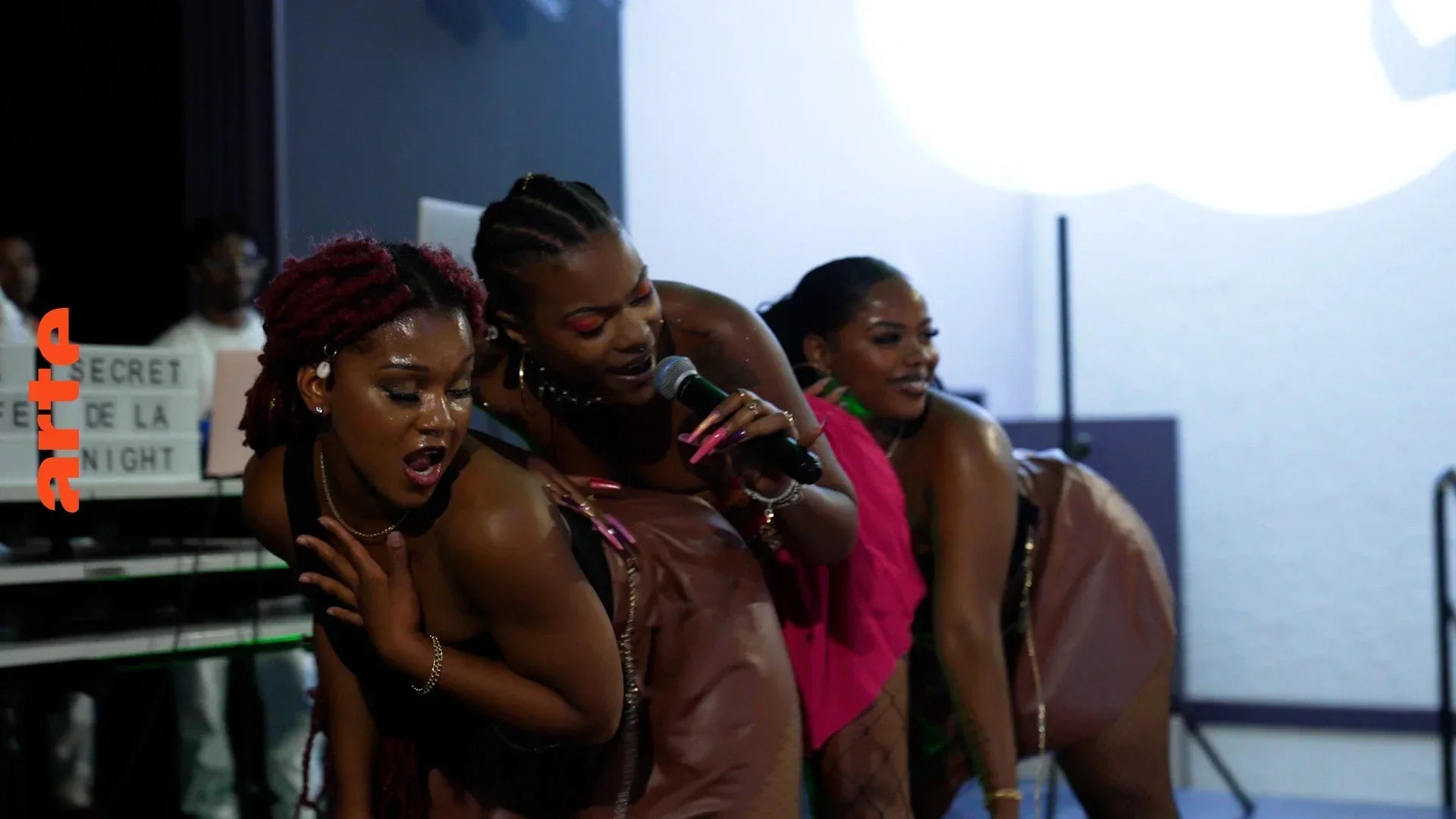
Theodora is one such figure. "KONGOLESE SOUS BBL" perfectly hits the codes: speed, tension, humor, vulnerability, identity. It's not a cosplay: it's a clear-sighted appropriation by an artist who thinks about bouyon, diaspora, hypersexualization, and mental health, all while aiming for the international stage. The streaming and viral success is not an accident, but a sign of a need: a sound that speaks unfiltered and knows how to make people dance despite everything.

Ricky Bishop and the rock bouyon movement show another path: injections of guitars and rock attitudes, without leaving the Caribbean rhythmic base. The result is a combat-oriented subgenre, designed for live performance with a complete and rich sound universe.

Bamby, already established in dancehall, navigates with a precision that opens a door between Antillean heritage, French rap, pop, and club:
What makes bouyon so relevant in 2025 is the global context: precarity, political tensions, disillusionment, hyper-connection. Audiences no longer want disembodied entertainment. They want intense, coded moments that belong to someone. Bouyon ticks these boxes: party music, but not neutral; body music, but linked to territories and stories.

The repercussions extend beyond music
In fashion, we see a return to a scene-sound system aesthetic: jerseys, shorts, football jerseys, technical pieces worn in clubs, heavy jewelry, wraparound glasses, busy visuals. In visuals, massive typography, saturated colors, direct references to islands and neighborhoods, no cold minimalism. In social life, parties are once again collective, frontal, coded, far from distant attitudes.
The question for creators is not "how to copy bouyon," but how to understand what it changes: a demand for intensity, readability, and coherence between sound, image, body, and place. Those who draw from its codes while respecting its scenes and origins will find a powerful source. Those who reduce it to a convenient loop will appear to be what they are: behind the times.





Share: