





Art Deco or Art Nouveau: The Differences and the Buildings That Help You Tell Them Apart
Telling Art Deco and Art Nouveau apart: periods, lines, materials, Guimard, Horta and examples. An illustrated guide, a comparison method and an FAQ.
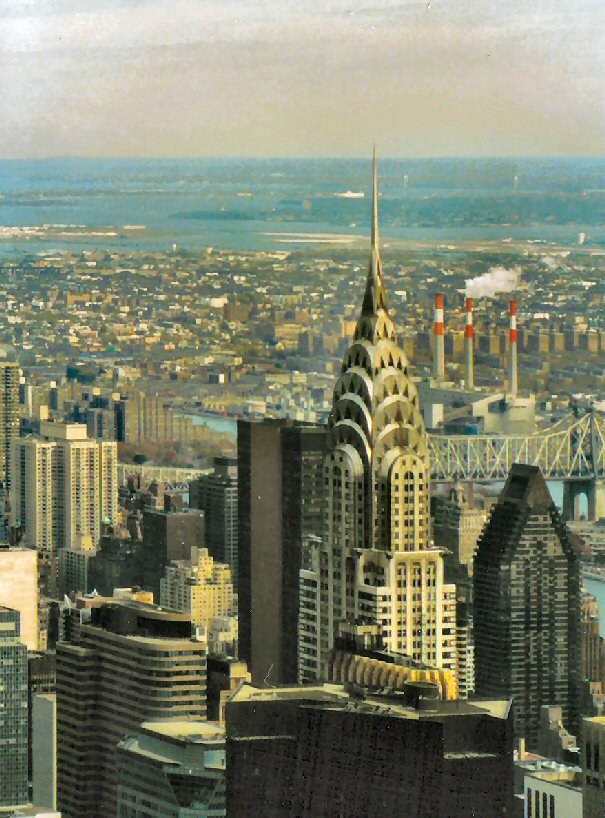
Art Nouveau and Art Deco are two different stories of modernity. The first developed mainly around 1900, with an interest in plant-like lines, curves and the integration of the arts. The second is mostly associated with the interwar period and combines, among other things, geometry, stylization and decorative craftsmanship. To recognize a building, the date, the materials and the composition matter as much as an isolated motif. Here is a comparison method, some examples to look at and a graphic exercise to avoid reducing these movements to “flowers versus triangles.”
Art Nouveau and Art Deco: the essential difference
Art Nouveau looks for modern forms through a dialogue with nature, technology and the decorative arts. Art Deco offers other syntheses, often more geometric, but it too remains varied. The Victoria and Albert Museum’s Art Nouveau and Art Deco collections are two reliable starting points for placing objects, architecture and images in their context. The periods sometimes overlap through careers and transformations, without becoming interchangeable.
To identify a facade, start with its overall logic. Do the lines branch out around the openings? Are the reliefs organized by axes, setbacks or stylized repetitions? Then ask what role the material plays. Undulating ironwork and a geometric stone entrance do not have the same effect, but neither is enough on its own to date a building. Renovations and later additions also mean you need to check heritage records.
Art Nouveau: a line that connects the elements
In Art Nouveau, the decoration can link a banister, a door, a glass roof and a wall motif. The project is then understood as a whole, not as a neutral building with flowers placed on top. The V&A’s feature on Art Nouveau explains the international spread and the variations of the movement. Natural forms can remain recognizable or become abstract; the relationship between structure and ornament varies from one work to another.
In an image, look for points of continuity. Does a curve in the ironwork carry on into the outline of an opening? Does the motif guide movement or the eye? This reading is more useful than an inventory of the plants depicted. It also helps explain why a poster, a piece of furniture and a house can speak to one another. Their kinship may lie in a way of organizing lines. For contemporary use, hold on to this principle of coherence rather than copying an isolated detail without knowing who designed it.
Guimard and the metro: recognizing an urban vocabulary
The Paris metro entrances associated with Hector Guimard are among the most accessible references for discovering Art Nouveau. Their metal elements, their curves and their signage give an identity to everyday infrastructure. An entrance can thus contribute to the experience of the city while fulfilling a very practical function: making access to the network easy to spot.
Compare a full view and a detail. The first shows how the entrance structure fits into public space; the second reveals the lines, the joints and the lettering. Also check which elements are original, moved, restored or reconstructed. This precision avoids treating every entrance as a witness left unchanged since it was installed. For a reference notebook, note the exact location and photograph its relationship with the sidewalk. The style then becomes a way of organizing use and perception, instead of a mere decorative frame.

Victor Horta: look at the interior too
Victor Horta’s houses in Brussels invite you to observe architecture through their staircases, glass roofs and interior layouts. The UNESCO World Heritage Centre documents several of these residences inscribed on the World Heritage List. The way light falls through the building and the way lines accompany circulation matter as much as the facade. An exterior image alone is therefore not enough to grasp the ambition of the whole.
The staircase is a good analytical tool. Look at how it connects the floors, how a banister accompanies movement and how the materials echo one another. Don’t conclude from this that all interiors of the period are identical. Commissions, budgets and transformations produce considerable differences. For a visit or a publication, respect photography restrictions and credit the images. Being able to look at a heritage site does not automatically give you the right to reuse any photograph of its decor.

Art Deco: geometry, stylization and diversity
Art Deco developed in a context of modernization, international circulation of objects and decorative experimentation. The 1925 Exposition internationale des arts décoratifs et industriels modernes in Paris is a major landmark. Even so, not every building from the 1920s is Art Deco, and not every geometric form belongs to the movement. Materials, programs and references can vary considerably between countries and designers.
Look for rhythmic effects: repeated bays, simplified reliefs, successive setbacks and stylized motifs. Also look at the contrast between the overall composition and the precious details. Decoration can highlight an entrance, a crown or an interior element without taking over the entire facade. This hierarchy explains its graphic strength. To build a contemporary reference, describe where the ornament is concentrated and why. A gold border placed everywhere does not reproduce this discipline; it only risks blurring the differences between pieces of information.
The Chrysler Building and Chaillot: comparing without standardizing
The Chrysler Building in New York and the Palais de Chaillot in Paris offer two very different reference points for interwar architecture. The first puts particular emphasis on verticality and a metal crown; the second forms a monumental ensemble facing an urban space and a landscape. Bringing them together in one study shows the range of forms associated with this period, rather than producing a single model.
The comparison has to stay precise. Sketch the main lines of each silhouette, then identify the role of the motifs. Next, look at the relationships of scale with people and neighboring buildings. A skyscraper and a monumental cultural complex do not answer the same brief. Detail shots are appealing, but they can erase this difference. On a mood board, place the general views before the ornaments and caption each image. The reference will then make sense without relying on spoken commentary.


A mental chart so you never mix them up again
Remember four complementary criteria: period, dominant lines, organization of the decoration and the relationship between materials. For Art Nouveau, an organic continuity can be a clue; for Art Deco, a geometric stylization can steer the analysis. These are starting points, not absolute rules. Hybrid works and the evolution of a single designer call for more detailed documentation.
A simple method is to write a sentence without using the name of the style: “the curves of the gate extend the design of the door” or “the reliefs are concentrated around the entrance axis.” Then add the date and the designer once they have been verified. You will then know why you are using a category. The feature on Bauhaus architecture offers another point of comparison: modern architecture does not follow a single path, and the reduction of ornament is only one part of the debates of the 20th century.
HYTRAPE exercise: two posters, the same information
For a fictional event, keep the same title, the same date and the same venue. In the first version, work with a continuous line that connects the pieces of information; in the second, use an axial structure with highly simplified motifs. The goal is not to produce historical fakes, but to understand how two logics change the hierarchy and the sense of movement.
Browse the covers and posters to think about textures and contrasts, then the Photoshop packs to manage your versions. Use your own drawings or resources whose license allows the intended use. Don’t present a poster as belonging to a movement simply because it features a flower or a fan. Check legibility on a phone and on paper. If the decoration obscures the date or the venue, scale it back. A stylistic reference stays useful when it supports the message instead of replacing it.
Planning an architecture walk with good sources
Choose a small number of documented sites rather than a long list of images that are hard to attribute. For each one, note the name, the date, the architect and one detail to look at. Consult institutions and heritage records to confirm the identification. Access conditions and exhibitions change: they need to be checked at the time of your trip, rather than copied from an old blog post.
On site, observe the relationship between facade, entrance and interior when the interior is accessible. A motif does not tell the whole story of a building. Also leave room for restorations and current uses: they are part of its history. The features on adaptive reuse in architecture and Le Corbusier extend this reflection on what becomes of buildings over time. Understanding Art Nouveau and Art Deco ultimately means learning to connect a form to a period, a program and a way of making, while recognizing the limits of what an image alone can establish.
Art Nouveau and Art Deco: the key points in a table
| Criterion | Art Nouveau | Art Deco |
|---|---|---|
| Reference period | Around 1900 | Especially the 1920s and 1930s |
| Common lines | Curves, organic continuity | Geometry, stylized rhythms |
| Examples | Guimard, Horta | Chrysler Building, Palais de Chaillot |
| Caveat | Not just floral decoration | Not just gilding or a triangle |
Frequently asked questions
What is the difference between Art Nouveau and Art Deco?
Art Nouveau developed mainly around 1900, with organic lines and integrated decoration. Art Deco is associated above all with the interwar period, with an often geometric stylization. Both movements remain diverse.
Are Guimard’s metro entrances Art Deco?
They are associated with Art Nouveau. Their metal lines and their signage belong to a vocabulary distinct from the Art Deco compositions of the interwar period.
Is Art Deco limited to gold motifs?
No. The movement brings together a wide range of materials, programs and forms of expression. Geometry and the hierarchy of the decoration are often more useful for analysis than the mere presence of gold.
Why is 1925 an important landmark?
The Exposition internationale des arts décoratifs et industriels modernes in Paris is a major landmark in this history. It does not mean that all of the movement’s works were created that year.
Further reading in the HYTRAPE Journal
- Bauhaus architecture: principles, Dessau and the centenary legacy
- Frank Lloyd Wright: organic architecture, Fallingwater and key works
- Japanese architecture: principles, houses, temples and museums
Sources and method
Sources consulted on October 29, 2026. The historical facts and attributions are based on the references below. The reading methods and creative exercises are HYTRAPE editorial analysis. The exercises are fictional; they are not architectural projects carried out by HYTRAPE.
HYTRAPE shop · Free Resources
Put your reading into practice.
A Free Resources selection from HYTRAPE’s independent creators.
-
 HYTRAPE x ATTRACT VISUAL
+10 BROKEN GLASS TEXTURE (FREE)
Free
-
 HYTRAPE x ATTRACT VISUAL
+100 HD TEXTURE PACKS (FREE)
Free
-
 HYTRAPE
BERRIE FONT (FREE)
Free
-
 Fox Rockett Studio
Surface Supply Texture Pack
Free
-
 HYRO(IC)
+35 HYROIC / HYRO(IC) FREE sample pack
Free


20,000+ downloads 4.7/5 45 verified reviews
Keep reading
ARCHITECTURE
Adaptive Reuse in Architecture: Four Projects and the Right Questions
Tate Modern, Frac Grand Large, SESC Pompéia and Lacaton & Vassal: understanding how existing buildings are transformed, their uses and their trade-offs.
Bioclimatic Architecture: Principles and Summer Comfort Explained
Orientation, shade, ventilation, insulation and thermal mass: understanding bioclimatic design, with examples, official sources and an FAQ.


Japanese Architecture: Principles, Houses, Temples and Museums
Thresholds, wood, shoji and contemporary museums: understanding Japanese architecture through Hōryū-ji, Katsura, Teshima and Kanazawa. Images and FAQ.